
Why Vintage Decor Is a Sustainable Choice
Table of Contents
- The Environmental Case for Vintage Decor
- Environmental Benefits of Buying Vintage
- Durability and Longevity: Built to Last
- How to Decorate With Vintage Items
- How to Care for Vintage Glassware
- Responsible Sourcing and Avoiding Greenwashing
- Frequently Asked Questions
Last Updated: October 17, 2026
The Environmental Case for Vintage Decor
Choosing vintage decor sustainable practices is one of the most straightforward ways to reduce your household's environmental impact. When you buy pre-owned pieces, whether crystal glassware, china plates, or collectible home accents, you're making a choice that diverts items from landfills, reduces demand for resource-intensive manufacturing, and extends the life of items that were built to last. At AtopTheTables, we've spent over two decades sourcing exceptional vintage pieces from estates and auctions, and the sustainability angle has become central to why so many customers choose our collection.
The environmental benefits of vintage decor run deeper than most people realize. It's not just about reusing something old; it's about understanding the full lifecycle impact of what you bring into your home. This distinction matters because it separates genuine sustainability from greenwashing, a critical concern as environmental claims become increasingly common in retail.
Diverting Items From Landfill Waste
Every piece of vintage decor you purchase represents an item that stays out of the waste stream. When pre-owned glassware, china, and collectibles end up in landfills, they take decades to decompose, occupying space and potentially leaching materials into soil and groundwater. By choosing vintage decor, you're actively preventing that outcome.
This isn't a trivial impact. Households generate significant quantities of discarded home goods annually, much of it still functional. A vintage etched crystal wine goblet set, for example, might have been destined for disposal simply because a homeowner decided to redecorate. When you purchase that same set, you've prevented waste at the source. The piece continues its useful life, fulfilling its original purpose for another generation or longer.

The landfill diversion benefit compounds across your home. If you furnish a room with five vintage pieces instead of five new items, you've prevented five items from entering the waste stream. Scale that across thousands of households choosing vintage, and the aggregate landfill impact becomes substantial.
Reducing Demand for New Manufacturing
Manufacturing new home decor items requires significant resource extraction, energy input, and transportation. When you buy vintage decor instead of new, you reduce demand for newly manufactured alternatives, which means fewer raw materials extracted, less energy consumed in factories, and fewer production-related emissions generated.
This demand-reduction effect is particularly significant for items like fine china and crystal glassware. These products require specialized manufacturing processes: clay must be mined and refined, crystal must be produced from raw materials, glazes and finishes must be applied in kilns or through chemical processes. Each new piece manufactured represents a consumption of resources that vintage alternatives avoid entirely.
The manufacturing reduction also means fewer factory jobs in some sectors, which some might view as a drawback. However, the sustainability benefit, avoiding unnecessary resource extraction and energy consumption, outweighs this consideration for items that already exist in abundance and function perfectly well.
Environmental Benefits of Buying Vintage
Beyond waste diversion and reduced manufacturing demand, vintage decor delivers specific environmental advantages across multiple dimensions of the product lifecycle.

Lower Carbon Footprint and Energy Savings
The carbon footprint of a vintage piece is dramatically lower than a newly manufactured equivalent. A vintage crystal decanter, for instance, was manufactured decades ago, its production emissions are already "spent" and cannot be changed. When you purchase and use that decanter, you're amortizing those historical emissions across an extended timeline. A new decanter would generate fresh production emissions, plus transportation emissions, plus packaging waste.
This lifecycle perspective is crucial. According to research on product lifecycle emissions, the manufacturing and transportation phases typically account for the largest share of a product's total environmental impact. By choosing vintage, you eliminate both of those phases entirely.
Energy savings also arise from avoiding the manufacturing process. New glassware and china production requires significant kiln energy, heating to temperatures exceeding 2,000 degrees Fahrenheit. Vintage pieces bypass this entirely. The cumulative energy savings across a household's vintage decor collection represent a measurable reduction in household-level energy consumption.
Preserving Raw Materials and Natural Resources
Vintage decor preserves finite and renewable resources that would otherwise be extracted for new production. Crystal glassware relies on silica sand, lead, and other minerals. Fine china requires clay, feldspar, and kaolin. Collectible glass items depend on silica and various mineral additives. Each new piece manufactured requires fresh extraction of these materials.
When you choose vintage decor, you're choosing to preserve those raw materials in the ground. This matters particularly for items like lead crystal, which has become less common in new production due to environmental and health concerns. Vintage lead crystal pieces represent a preserved stock of materials that will not be re-extracted.
The preservation of natural resources extends to forests as well. Manufacturing processes for ceramics and glassware require significant energy, much of which historically came from fossil fuel combustion. Reducing manufacturing demand reduces the energy required, which reduces pressure on fossil fuel extraction and the environmental damage associated with it.
Reducing Transport Emissions Through Local Sourcing
One often-overlooked advantage of vintage decor is the opportunity to source locally. When you purchase from local estate sales, auctions, or regional vintage dealers, you eliminate the international shipping emissions associated with mass-produced new goods. A piece sourced from an estate sale in your region generates a fraction of the transport emissions compared to new items shipped from manufacturing centers overseas.
AtopTheTables sources pieces from estates and auctions across regions, which means many customers can find locally-relevant items that reduce transportation impact. Choosing to shop vintage through regional sources, whether online dealers with regional focus or local auction houses, amplifies the transport emissions benefit.
Durability and Longevity: Built to Last
Vintage decor pieces, particularly those from the mid-twentieth century and earlier, were manufactured with durability as a core design principle. This built-to-last approach contrasts sharply with much modern production, where planned obsolescence and cost-cutting often prioritize affordability over longevity.
A vintage crystal wine goblet set, for example, was engineered to withstand decades of use, washing, and handling.
Longevity is itself an environmental benefit. A product that lasts fifty years generates a lower annualized environmental impact than a product that lasts five years, even if the longer-lasting item had higher production emissions. This principle, sometimes called "buy it for life", underpins much of the sustainability case for vintage.
This durability also means fewer replacement purchases over time. If you purchase a vintage decor piece that functions perfectly for the next twenty years, you've avoided purchasing five to ten new replacement items across that same period. Each avoided replacement purchase eliminates manufacturing, transportation, and packaging emissions.
Vintage Etched Floral Crystal Wine Goblets, Set Of 6 Elegant Stemware, 7.75 Inch →
How to Decorate With Vintage Items
Integrating vintage decor into your home doesn't require committing to a fully vintage aesthetic. Many of the most visually striking interiors blend vintage and modern pieces, creating layered, personalized spaces that feel collected rather than decorated.
Blending Vintage and Modern Decor Ideas
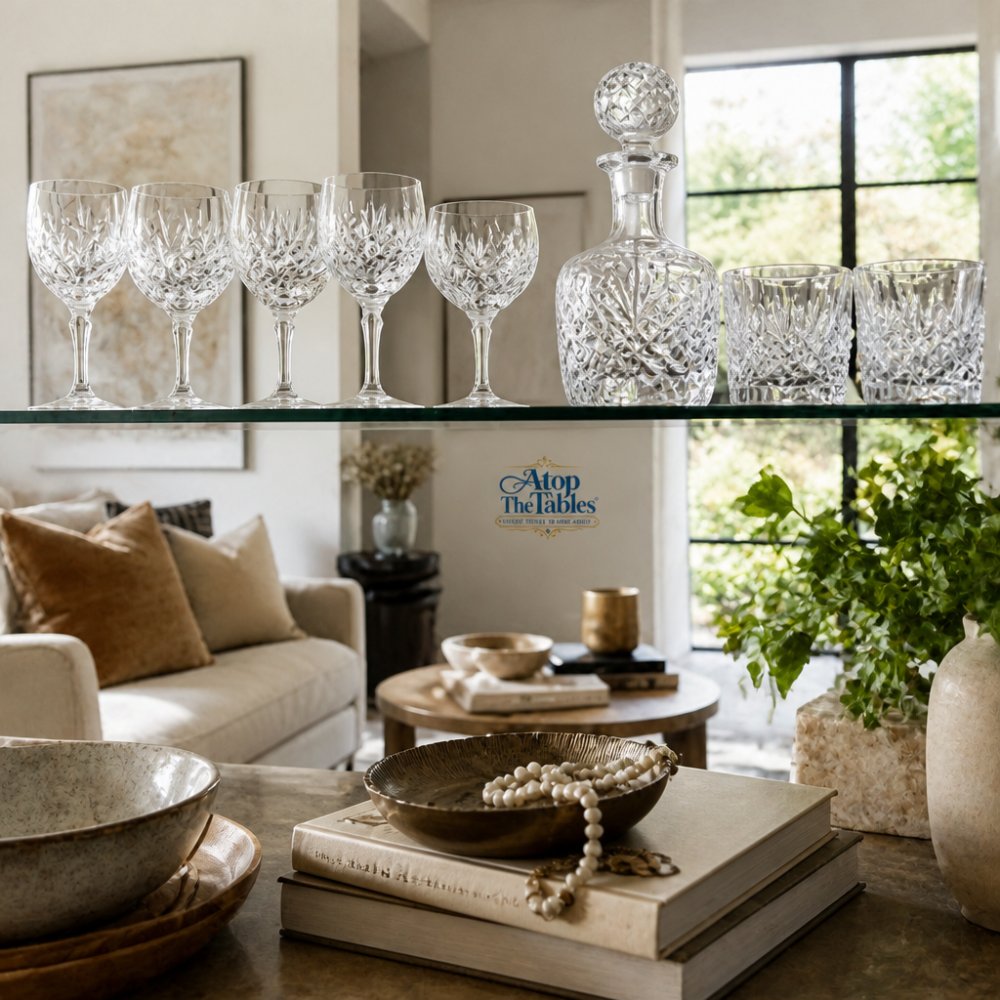
The most effective approach to mixing vintage and modern decor is to treat vintage pieces as intentional focal points rather than background elements. A set of vintage etched crystal goblets displayed on open shelving becomes a visual anchor in a modern kitchen. A vintage hand-cut decanter positioned on a bar cart or console table draws the eye and creates conversation.

Start by identifying one or two vintage pieces that genuinely appeal to you, not items you feel obligated to like because they're "sustainable," but pieces you'd enjoy looking at daily. The sustainability benefit is real, but the piece also needs to work in your space and bring you satisfaction.
Color and material palette matter when blending eras. Vintage crystal and glassware typically feature clear or neutral tones with elegant detailing. These work well alongside contemporary minimalist decor, modern industrial aesthetics, or even eclectic bohemian styles.
Texture contrast also enhances the blend. Smooth, polished vintage crystal looks striking against matte modern surfaces. Ornate vintage china patterns create visual interest against solid contemporary walls. This textural interplay is what makes vintage-modern combinations feel designed rather than accidental.
How to Care for Vintage Glassware
Proper care extends the life of vintage glassware and preserves its beauty and function. Many people hesitate to purchase vintage pieces because they worry about durability or maintenance, but with appropriate handling and care, vintage glass and crystal remain functional and beautiful for decades.
Repair and Restoration for Extended Life
Vintage glassware occasionally arrives with minor damage, a small chip on a rim, light etching from age, or residual marks from long storage. Many of these issues can be addressed through professional restoration or careful home repair, extending the piece's life and restoring its visual appeal.
Professional restoration services can address significant damage: a chipped rim can be professionally ground smooth, cloudy crystal can be polished to restore clarity, and loose decorative elements can be re-adhered. These services cost money, but they're often justified for high-quality pieces or items with sentimental value.
For minor issues, careful home care often suffices. Hand washing with gentle soap and warm water removes residue. Soft cloths prevent scratching. Proper storage, wrapped in soft cloth, away from temperature extremes, prevents further damage.
The sustainability value of repair is significant. A vintage crystal goblet that receives professional restoration for a small chip remains in use for another twenty years, rather than being discarded. The restoration cost is offset by the extended lifespan and the avoided environmental impact of purchasing a replacement.
Responsible Sourcing and Avoiding Greenwashing
Not all vintage decor is equally sustainable, and not all claims about vintage sustainability are equally valid. Understanding the difference between genuine environmental benefit and greenwashing is essential for making informed choices.
Greenwashing in the vintage sector typically takes two forms: exaggerated environmental claims ("This piece is 100% sustainable") and deliberate misrepresentation of condition or origin.
Responsible sourcing means understanding where your vintage decor comes from. Pieces acquired from estates, auctions, and established dealers with transparent sourcing practices represent genuine pre-owned goods with documented history.
Avoid vendors who make vague sustainability claims without specifics. "Eco-friendly vintage" is marketing language unless accompanied by actual information about sourcing, condition, and lifecycle impact.
The sustainability benefit of vintage decor sustainable sourcing is real and substantial, but it's not automatic.
Choosing vintage decor means investing in pieces with history, character, and proven durability. When you shop at AtopTheTables, you're accessing hand-picked items sourced from estates and auctions since 2003, each piece selected for quality and craftsmanship.
Frequently Asked Questions
Why is vintage decor considered sustainable?
Vintage decor is sustainable because it extends the life of existing items, diverting them from landfills and reducing the demand for new manufacturing. When you buy pre-owned pieces, you eliminate the energy, raw materials, and emissions required to produce new items. Vintage pieces often feature superior craftsmanship and durability compared to mass-produced alternatives, meaning they last longer and require less frequent replacement, further reducing your environmental impact.
How does buying vintage decor reduce waste?
Every pre-owned vintage piece you purchase is one fewer item destined for disposal. The waste reduction happens at multiple stages: fewer new items are manufactured (saving resources), existing items stay in use longer, and fewer discarded pieces end up in landfills. Additionally, vintage decor often features timeless designs that don't go out of style, meaning you're less likely to replace it in a few years like you might with trendy modern pieces.
How can I mix vintage and modern decor without making a room feel dated?
Balance is key. Use vintage pieces as statement accents rather than filling an entire room with them. Pair vintage crystal goblets or antique majolica plates with clean, contemporary decor and neutral walls. Mix eras by selecting pieces with strong lines or neutral colors that complement modern styles. For example, a set of vintage etched crystal wine goblets can add elegance to a modern dining table without overwhelming the space. Let each piece breathe and choose vintage items that reflect your personal style rather than every trend from their era.
How do I care for vintage glassware to make it last longer?
Hand wash vintage glass and crystal gently with mild soap and warm water, avoiding abrasive scrubbers that can scratch delicate surfaces. Dry promptly with a soft cloth to prevent water spots. Store carefully to avoid chips and cracks; use felt or cloth separators between stacked pieces. Avoid sudden temperature changes, which can cause cracking. For pieces with decorative finishes or gold trim, like vintage Libbey tumblers, hand washing helps preserve the design. Proper care extends the life of these heirloom-quality pieces and maintains their beauty for decades.
