
Most Sought After China Pattern: Which One Really Wins?
Table of Contents
- The Most Sought After China Pattern, Answered
- How We Ranked Demand, Popularity, and Market Value
-
The Numbered List: 8 China Patterns Collectors Chase Most
- 1. Haviland Limoges: The Blue Floral Standard
- 2. Noritake Magnificence #9736: The Modern Floral Favorite
- 3. Lenox Solitaire: Quiet American Elegance
- 4. Wedgwood Blue Willow: The Transferware Icon
- 5. Royal Albert Old Country Roses: The Gift-Giving Classic
- 6. Meissen Blue Onion: The Porcelain Pedigree
- 7. Limoges Coronet: The French Floral Workhorse
- 8. Spode Christmas Tree: The Seasonal Perennial
- Popularity vs. Value: Why the Loudest Pattern Isn't the Priciest
- Most Valuable Antique China Patterns and What Drives the Price
- Most Sought-After Haviland Patterns in the Collector Market
- How to Identify China Patterns: A Practical Workflow
- China Pattern Replacement Pieces: Completing a Set Without Overpaying
- Frequently Asked Questions
Last Updated: October 20, 2026
The Most Sought After China Pattern, Answered
The most sought after china pattern is Haviland Limoges in its blue floral designs, the pattern family that collectors, estate buyers, and replacement shoppers chase harder than any other.
Below, we rank eight patterns by real collector demand, explain why popularity and price so often disagree, and give you a working method for identifying what is already in your cabinet.
How We Ranked Demand, Popularity, and Market Value
Demand is not the same thing as price. A pattern can be wildly popular and still sell for modest money, while a quieter design from a prestigious maker commands far more per plate.
We scored each pattern on four things: how often buyers ask for it, how hard replacement pieces are to find, how consistently it sells, and how much condition affects the final number.
The Numbered List: 8 China Patterns Collectors Chase Most
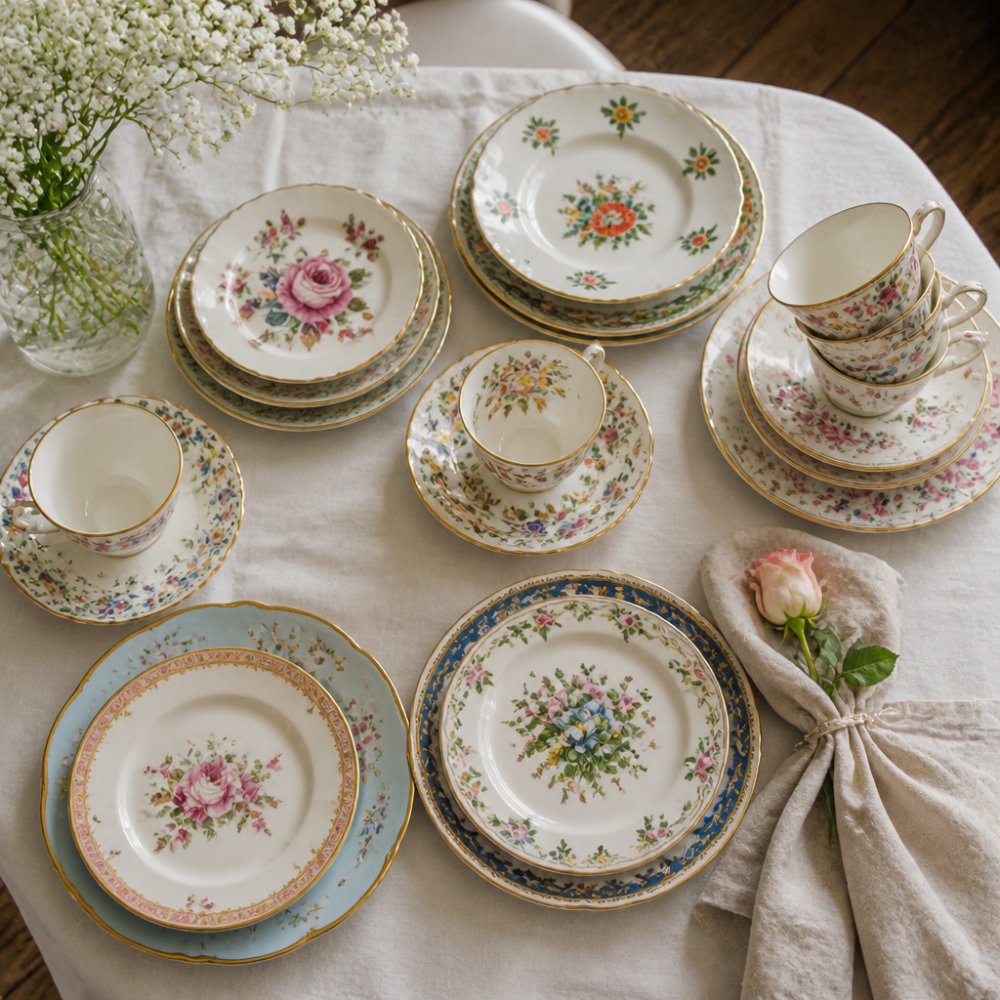
Here is our ranked list, built from the patterns that move most reliably through estate sales and collector requests. Each entry notes the maker, the production window where it is documented, the visual markers that identify it, and the specific reason it earns its rank.
| Rank | Pattern | Maker | Production Window | Identifying Markers | Why Collectors Want It |
|---|---|---|---|---|---|
| 1 | Haviland Limoges blue floral | Haviland | Late 1800s onward, many series | Blue floral sprays, gold trim, factory backstamp with pattern number | Deep demand, hard to complete |
| 2 | Noritake Magnificence #9736 | Noritake | 1983-1996 | Pink rose bouquets, teal and mauve geometric bands, bright gold rim | Modern favorite, strong replacement demand |
| 3 | Lenox Solitaire | Lenox | Late 20th century onward | Ivory bone china, platinum trim, gold Lenox backstamp | Quiet American elegance, easy to live with |
| 4 | Wedgwood Blue Willow | Wedgwood | Continuous, centuries of production | Cobalt chinoiserie scene under clear glaze | Transferware icon, broad appeal |
| 5 | Royal Albert Old Country Roses | Royal Albert | Introduced 1962, still in production | Clustered roses, gold trim, scalloped rim | The gift-giving classic |
| 6 | Meissen Blue Onion | Meissen | 18th century onward | Blue onion motif, crossed-swords mark | Porcelain pedigree |
| 7 | Limoges Coronet | Limoges | Mid-20th century | Floral centers, gold rims, solid porcelain body | French floral workhorse |
| 8 | Spode Christmas Tree | Spode | Introduced 1938, still in production | Green border, holiday tree motif | Seasonal perennial |
1. Haviland Limoges: The Blue Floral Standard
Haviland Limoges takes the top spot because its blue floral designs combine age, artistry, and genuine scarcity. These are hand-painted and transfer-decorated porcelains from French Limoges workshops, and complete services rarely survive intact because the pattern family spans many series produced across decades.

The blue floral motifs, often with delicate gold trim, appeal to collectors who want porcelain artistry rather than a printed repeat.
2. Noritake Magnificence #9736: The Modern Floral Favorite
Noritake Magnificence is the pattern we see requested most often among buyers furnishing a home rather than completing an heirloom.
Our Noritake Magnificence dinner plates set of 4 at $59.77 shows why: fine Japanese bone china, 10.25 inches across, and a floral motif that reads traditional without feeling dated. We also carry salad plates and cup and saucer sets.


3. Lenox Solitaire: Quiet American Elegance
Lenox Solitaire is the pattern for people who want fine china they can actually use. Ivory bone china with platinum trim and a gold Lenox backstamp make it a practical choice on this list.
Our Lenox Solitaire dinner plates at $87.82 suit formal entertaining, while the bread and butter plates at $43.82 finish a setting without fuss.
4. Wedgwood Blue Willow: The Transferware Icon
Blue Willow is the most recognized transferware design in the world, and Wedgwood's version carries real collector weight. The chinoiserie scene, printed in cobalt under a clear glaze, has been made continuously for centuries.
Its popularity is broad rather than exclusive, which keeps prices reasonable and supply steady.
5. Royal Albert Old Country Roses: The Gift-Giving Classic
Old Country Roses is the pattern people buy for other people. Introduced in 1962 and still in production, the clustered roses and gold trim have made it a wedding and anniversary standby for generations, which keeps demand constant.
The downside is volume. So many pieces exist that resale value stays modest unless a piece is unusually rare or an early production example.
6. Meissen Blue Onion: The Porcelain Pedigree
Meissen invented European hard-paste porcelain, and the Blue Onion pattern carries that history in every piece (History). Collectors pay for the crossed-swords mark as much as the design.
Genuine early pieces are valuable. Later versions are affordable. Learning to read the mark is essential here, because the crossed swords have been reproduced and the mark's style changed across periods.
7. Limoges Coronet: The French Floral Workhorse
Coronet is a Limoges pattern that turns up often and sells steadily. Floral centers, gold rims, and solid porcelain construction make it a dependable entry point into French china.
It lacks the prestige of Haviland, which is exactly why it is affordable.
8. Spode Christmas Tree: The Seasonal Perennial
Spode Christmas Tree sells every December without fail. Introduced in 1938 and still in production, the green border and holiday tree motif have made it a tradition in countless homes (Spode & Stoke-on-Trent: England's Pottery Legacy).
Seasonal demand means prices peak in November and soften by February.
Noritake Magnificence Bone China Dinner Plates Set 4 Gold Rim Pink Roses #9736 →
Popularity vs. Value: Why the Loudest Pattern Isn't the Priciest
The most popular pattern is rarely the most valuable one. Popularity means lots of pieces were made, and volume pushes prices down. Value comes from scarcity, condition, and maker prestige.
But that summary hides the mechanics that actually decide what a piece sells for. Here is how to separate demand, rarity, and realized price so you can judge a pattern on evidence rather than reputation.
Define the Three Things Buyers Confuse
Demand is how many buyers are actively looking for a piece right now. Rarity is how few examples survive in the condition buyers want. Realized value is what a piece actually sold for, not what a seller hoped to get. A pattern can be high-demand and low-rarity (Old Country Roses), low-demand and high-rarity (an early Meissen example), or high-demand and high-rarity (Haviland blue floral in complete place settings).
Use Completed Sales, Not Asking Prices
Asking prices reflect hope; completed sales reflect what someone actually paid. When you compare patterns, look at completed sales over a defined window, and record four things for each: the date of sale, the condition grade, whether the lot was complete or a single piece, and the sample size. A pattern with three completed sales tells you far less than one with thirty.
Condition and Completeness Move the Number More Than the Pattern Name
A chip, crazing, gold loss, or an old repair can cut what a piece brings far more than a change of pattern would. Completeness works the same way: a full place setting with the dinner plate, salad plate, and teacup and saucer is worth far more than the same pieces sold separately, and a service missing its serving pieces is harder to complete and slower to sell.
Demand Is Not Universal: Region, Generation, and Use Case
Collector preferences vary by region, age group, and use case, so treating demand as universal is a mistake. Buyers furnishing a first home tend to favor patterns that are easy to replace, while buyers completing an inherited service tend to favor the exact pattern number on the backstamp, regardless of price. Seasonal patterns peak around the holidays and soften afterward.
What This Means for the Ranking
Haviland blue floral leads because it combines high demand with genuine rarity in complete place settings. Noritake Magnificence and Lenox Solitaire rank high on demand but are easier to complete, which keeps per-piece prices moderate. Blue Willow and Old Country Roses are the most recognized names on the list and the least likely to appreciate. Recognition is not worth; completed sales are.
Most Valuable Antique China Patterns and What Drives the Price
Age alone does not create value. The most valuable antique china patterns share three traits: limited production, a prestigious maker's mark, and survival in excellent condition.
Completeness matters just as much. A full place setting with the dinner plate, salad plate, and teacup and saucer is worth far more than the same pieces sold separately. Crazing, trim wear, and repairs cut value sharply.
Most Sought-After Haviland Patterns in the Collector Market
Among Haviland patterns, the blue floral designs lead, followed by the company's heavily gilded dinner services. Collectors look for the full factory backstamp, the pattern number, and the country of origin marking.
How to Identify China Patterns: A Practical Workflow
Identification starts with the backstamp, then moves to the motif.
Read the Backstamp and Maker's Mark
Turn the piece over. The backstamp, also called the maker's mark or service mark, tells you the manufacturer and often the country of origin. Photograph it in daylight and compare lettering styles carefully.
Match the Motif, Trim, and Glaze
Next, match the floral motif, the gold or platinum trim, and the glaze finish against known pattern references. Pattern numbers, when present, settle the question fastest.
China Pattern Replacement Pieces: Completing a Set Without Overpaying
Replacement pieces are where most collectors spend their money. Buy the common pieces first and hold out for the rare ones.
Check the diameter before you buy. A salad plate and a bread and butter plate can look identical in a photo but differ by two inches, and the wrong size will not sit right in your stack. Confirm condition notes, and ask about trim wear.
Frequently Asked Questions
Which is more expensive, bone china or fine china?
Bone china usually costs more because it contains bone ash, which gives it a lighter body and a warmer, translucent glow. Fine china is fired from a porcelain-type clay body without bone ash. Price still depends more on pattern rarity, maker, and condition than on material alone. A discontinued bone china pattern in excellent condition with bright gold trim will typically outsell a common fine china pattern, while a scarce fine china design from a well-known maker can beat both.
How can I identify a china pattern?
Start with the backstamp on the underside: maker's name, country of origin, and often a pattern number or service mark. Then match the visual details, including the floral motif, trim color, glaze finish, and rim shape. Pattern number searches are the fastest route when the mark is legible. Photograph the front and back in daylight and compare against pattern reference archives. If the mark is worn, the motif itself, such as a specific rose bouquet or blue-and-white border, often narrows the field quickly.
Where can I find replacement pieces for a china pattern?
Replacement pieces turn up most often in estate sales, auction lots, and curated vintage shops that buy full services and break them into sets.
Are discontinued china patterns more desirable?
Discontinued patterns often attract more interest because buyers cannot order new pieces, so completing a set depends on the secondary market. That scarcity pushes demand for replacement pieces, especially dinner plates and teacups, which break most often. Desirability still hinges on the pattern itself: a discontinued design with a strong floral motif, gold trim, and a recognized maker moves faster than an obscure one. Production dates help too, since collectors often prefer earlier runs.
Completing a set takes patience, and the wrong seller can turn a good find into a box of broken shards. AtopTheTables has curated vintage china since 2003, sourcing pieces from estates and auctions and packing every order with the care delicate porcelain demands. Explore our hand-picked dinner plates, salad plates, and cup and saucer sets, and build a table that tells a story.
