
Best Ways to Clean Vintage China: A Safe 2026 Guide
Table of Contents
- How to Identify Your China Before You Clean It
- The Gentle Hand-Washing Method That Works on Almost Everything
- How to Remove Brown Stains From Antique China
- How to Remove Tea Stains From China
- How to Clean Bone China Without Damaging the Gilding
- Crazing Lines, Stubborn Discoloration, and When to Stop
- How to Store Vintage China So It Stays Clean
- Conclusion: Clean Less, Damage Less, Keep It Longer
- Frequently Asked Questions
Last Updated: October 9, 2026
How to Identify Your China Before You Clean It
The best ways to clean vintage china start long before water touches the piece, and the same habits that keep clean vintage china safe apply from the first inspection. At AtopTheTables, we have handled estate pieces since 2003, and the single most common mistake is cleaning first and asking questions later.
Vintage china is any glazed ceramic tableware produced roughly before the 1980s, including porcelain, bone china, and earthenware. Each type reacts differently to water, heat, and cleaners.

Porcelain, Bone China, and Earthenware: What You're Handling
These three materials look similar on a shelf but behave very differently in a sink.
- Porcelain: Fired at very high heat. Dense, hard, and the most forgiving of the three.
- Bone china: Contains bone ash, which gives it that warm translucence. It is strong but its gilding and enamel decoration are fragile.
- Earthenware: Fired at lower heat. Porous, so it absorbs water and stains more readily.
If you are unsure which you have, hold the piece to a light. Bone china glows softly.
Reading Backstamps, Gilding, and Crazing
The backstamp tells you the maker and often the era. A "Spode Copelands China England" mark with a small letter C points to twentieth-century production, for example. Turn the piece over before washing and note three things:
- Gilding: Real gold decoration sits on top of the glaze. It rubs off with abrasives.
- Crazing: Fine web-like lines in the glaze. These trap water and stain.
- Existing chips or cracks: Water can seep in and worsen them.
A Smithsonian Institution guidance on caring for ceramic collections recommends handling decorated surfaces as little as possible. That principle guides everything below.
The Gentle Hand-Washing Method That Works on Almost Everything
Hand washing in warm water with mild dish soap is the safest method for nearly all vintage china. Skip the dishwasher entirely. Heat, harsh detergent, and rattling racks cause more damage than any stain.
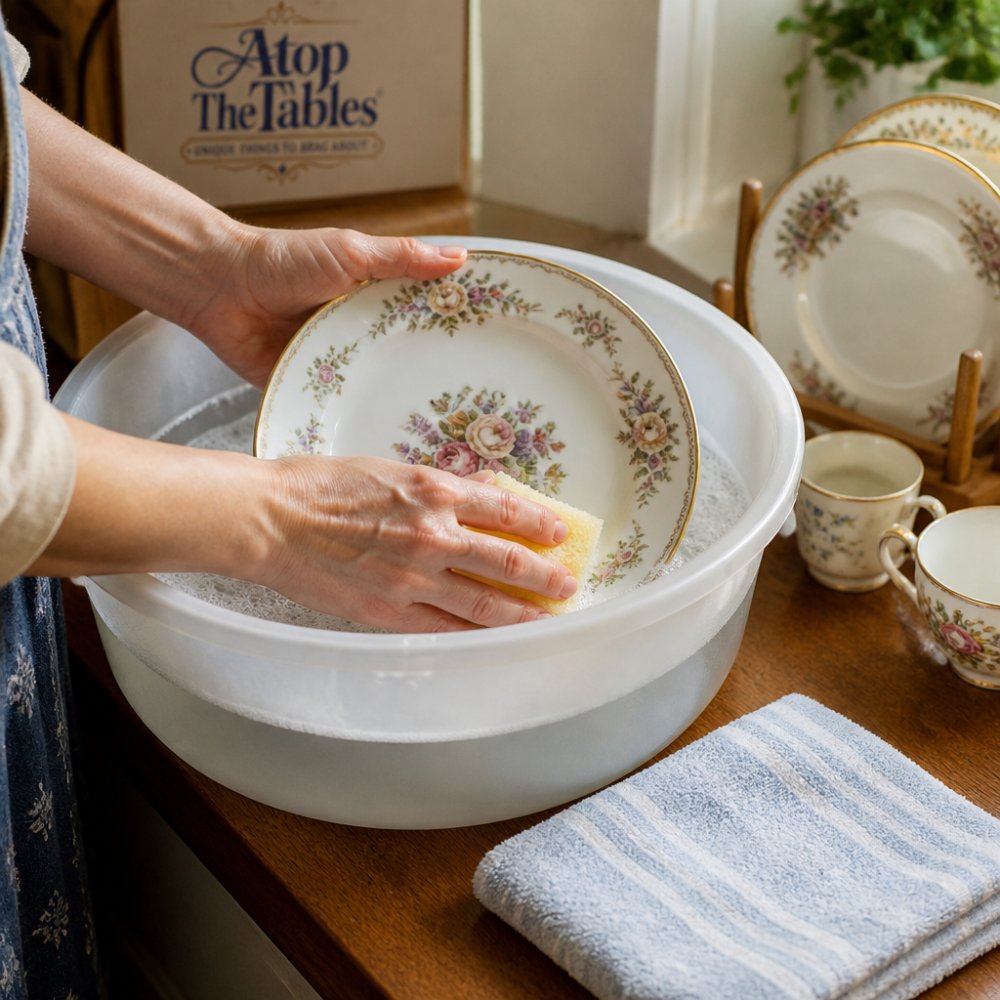
Warm Water, Mild Dish Soap, and the Right Cloths and Brushes
Line your sink or a plastic basin with a folded towel. This one step prevents most chips.
- Use warm water, never hot. Hot water can crack thin porcelain and soften gilding.
- Add a few drops of mild dish soap or a gentle detergent.
- Wipe with a soft cloth or sponge. For crevices, use a soft brush.
Never use a powdered cleanser, abrasive cleaner, bleach, or chlorine on decorated china. These strip gilding and dull the glaze.
Test-Patch First: A 60-Second Check Before You Commit
Test any method on the least visible spot first. The back rim or the underside of a plate works well. Apply your cleaner, wait, and rinse. If the gilding dulls or the glaze clouds, stop and try something gentler.
This 60-second habit saves pieces. We have seen well-meaning owners ruin gold trim with a single scrub.
How to Remove Brown Stains From Antique China
Brown stains on antique china usually come from age, food residue, or long storage in damp conditions. They sit in crazing lines and porous glaze, not on the surface.
Two home methods handle most cases. Test both on a hidden area first.
Hydrogen Peroxide Soaking and Lemon Juice and Salt Paste
Hydrogen peroxide soak: Use standard 3% hydrogen peroxide from a pharmacy.
Lemon juice and salt paste: Mix lemon juice with table salt to form a paste. Apply it to the stain with a soft cloth.
| Stain Type | Best Method | Time | Watch Out For |
|---|---|---|---|
| Light brown haze | Warm water and mild soap | 1-2 min | Scrubbing too hard |
| Set-in brown stain | Hydrogen peroxide soak | 15-30 min | Gilding and crazing |
| Localized spot | Lemon juice and salt paste | 3-5 min | Acid on gold trim |
| Tea or coffee film | Peroxide or lemon paste | 10-20 min | Over-soaking |
For a piece with heavy gilding, like our Antique Limoges France LS&S Porcelain Cabinet Plate Gold Gilt Floral 8.5" Decor, keep acidic treatments away from the gold.

How to Remove Tea Stains From China
Tea stains respond well to a hydrogen peroxide soak. Fill a basin with 3% peroxide, submerge the cup or pot, and leave it for 20 to 30 minutes.
For stubborn tea tannin, a lemon juice and salt paste works on the interior. Apply, wait five minutes, and rub gently with a soft sponge.
Cups with gold rims need extra care. Our 1979 Minton PERSIAN ROSE Set of 4 CUPS & SAUCERS Gold Trim Bone China England shows the classic gold-trimmed cup profile.
How to Clean Bone China Without Damaging the Gilding
Bone china needs the gentlest touch of all. The material is strong, but its decoration is not.

Follow these rules:
Antique Z.S. & Co. Bavaria Signed Floral Teapot Creamer Sugar Set →
- Wash by hand only, one piece at a time.
- Use warm water and mild dish soap, nothing stronger.
- Keep cleaner off any gold or painted area.
Our Mintons Garden Pinks Demitasse Cups & Saucers Set of 5 England Bone China EUC has intact gilding on the rims and handles.
The Victoria and Albert Museum's care advice for ceramics makes the same point: avoid harsh detergents and sudden temperature changes.
Crazing Lines, Stubborn Discoloration, and When to Stop
Crazing is the fine web of lines you see in old glaze. It is not a crack in the body. It is a network of hairline fractures in the glassy surface layer, usually caused by the glaze and the clay body expanding and contracting at different rates over decades of temperature swings.
What you can do is manage what settles into them.
Why Crazed Pieces Stain Differently
A crazed glaze is no longer a sealed surface. The lines reach down to the porous body underneath, and anything that gets in, tea tannin, coffee oils, minerals from hard water, cooking fats, wicks along those channels and oxidizes.
This matters for treatment choice. Surface stains lift with a gentle wash. Crazing-related stains are inside the glaze layer, so they respond only to methods that can penetrate the same channels, which is why peroxide soaks work better than scrubbing, and why scrubbing a crazed piece mostly just wears down the surrounding glaze.
A Stain-Identification Check Before You Treat
Before choosing a method, identify what you are actually looking at:
- Gray utensil marks: Metal transfer from forks and spoons. These sit on top of the glaze and usually lift with a mild abrasive paste, not a soak.
- Brown rim or body haze: Age and oxidation, often following crazing lines. Peroxide soak is the usual first attempt.
- Yellow-brown interior film: Tea, coffee, or food residue. Peroxide or a lemon-and-salt paste on the interior only.
Treating the wrong category wastes time and adds risk. A mineral film does not need a 30-minute soak, and a utensil mark does not need acid.
Stop Conditions: When Cleaning Should End
Stop and do not proceed if you see any of the following:
- A crack that runs through the body, not just the glaze surface
- Glaze that is lifting, flaking, or feels rough and loose at the edge
- Old repairs or glue lines that could soften or release in water
For these, the correct move is a conservator, not a stronger cleaner. Conservators work with reversible treatments and can stabilize damage without risking the piece. Pushing further at home risks turning a stable flaw into a broken object.
How to Store Vintage China So It Stays Clean
Storage is where most vintage china either survives another generation or picks up its next stain. The goal is simple: keep pieces dry, cushioned, and stable, and handle them as little as possible.
Stacking, Padding, and What to Put Between Plates
- Place a coffee filter, felt pad, or piece of acid-free tissue between stacked plates. This prevents glaze-on-glaze abrasion, which dulls the surface over years.
- Do not stack cups directly on their rims. Rim-to-rim contact is where chips start. Stack them on their sides or nest them with a soft barrier between each.
- Keep the heaviest pieces at the bottom and the lightest on top. A stack of dinner plates under a stack of saucers is a recipe for a cracked saucer.
Humidity, Light, and Temperature
- Store in a dry interior cabinet, not a basement, attic, garage, or unheated porch. Damp air feeds the same crazing channels that cause staining.
- Keep pieces out of direct sunlight. Ultraviolet light fades hand-painted decoration and can yellow certain glazes.
- Avoid rapid temperature swings. Moving a cold piece straight into a warm room, or the reverse, stresses the glaze.
Routine Maintenance: Dust, Don't Wash
Most vintage china does not need to be washed often. If a piece is on display, dust it with a soft brush, a clean makeup brush or a soft-bristled pastry brush works well. Reserve full washing for pieces that are actually used or that have visible residue.
Less handling means less wear. Every wash is a small risk to gilding, decals, and glaze.
Dishwashers, Microwaves, and Food Use
These three questions come up constantly, and the honest answers are short.
- Dishwasher: No. Heat, harsh detergent, and rack movement damage gilding, decals, and crazed glaze. Even on a delicate cycle, the risk is not worth it.
- Microwave: No. Vintage china was not made for microwave use. Gilding and metallic decoration can arc, and uneven heating can crack the piece.
- Food use: Most vintage china is safe for serving food if the glaze is intact and there is no crazing, no chipping, and no gilding in contact with food. If the glaze is crazed, chipped, or worn, or if the piece has unknown or old decoration, treat it as decorative only. When in doubt, serve on it rarely and never store acidic foods in it.
If you plan to use a piece for serving, wash it by hand immediately after use rather than letting residue sit. The longer food or drink stays on the surface, the deeper it wicks into any crazing.
Conclusion: Clean Less, Damage Less, Keep It Longer
Caring for old porcelain is mostly about restraint. Warm water, mild soap, and a soft cloth handle routine cleaning, while peroxide and lemon paste take on the tough stains. The real skill is knowing when to stop.
That philosophy shapes what we do. AtopTheTables has sourced hand-picked china from estates and auctions since 2003, and we choose pieces with honest history and lasting character.
Frequently Asked Questions
Is it safe to soak vintage china?
Short soaks are fine for glazed, undecorated surfaces, but long soaking is where damage starts. Water seeps into crazing lines and unglazed foot rims, loosening gilding and sometimes lifting decoration. Keep soaks to 15 to 30 minutes in warm, not hot, water with a few drops of mild dish soap. Skip soaking entirely on pieces with visible crazing, hand-painted enamel, or heavy gold trim. When in doubt, wipe instead of soak.
Can you use baking soda to clean vintage china?
Baking soda works as a mild abrasive for utensil marks and light surface grime, but it is too aggressive for gilding and hand-painted decoration. Mix it into a paste with water, apply only to plain glazed areas, and rub with a fingertip, not a brush. Rinse thoroughly. Never use it on gold rims, and never combine it with acidic treatments on the same piece, since the two together can dull a glossy glaze.
Can vintage china go in the dishwasher?
No. Dishwasher detergent is alkaline and abrasive, and the heat cycle is the real problem. It strips gold trim, fades hand-painted florals, and worsens existing crazing over repeated washes. Even pieces marked dishwasher safe were tested decades ago against gentler detergents. Hand wash instead with warm water and mild dish soap, and dry immediately with a soft cloth. The same rule applies to microwaves: never heat vintage china, because metallic gilding can arc.
How do you clean crazing lines on vintage china?
Crazing is a network of fine cracks in the glaze, and it cannot be reversed. Cleaning inside the lines is risky because any liquid that enters can carry stain deeper or loosen the glaze further. If the lines look dark, a short hydrogen peroxide soak of 15 to 20 minutes can lighten them, followed by a thorough rinse and immediate drying. If the crazing is widespread or the piece is valuable, leave it alone or consult a conservator rather than treating it at home.