
Best Vintage Home Decor for Beginners: 2026 Guide
Table of Contents
- Why Vintage Home Decor Works in Any Space
- Quick Comparison: Best Vintage Home Decor Pieces for Beginners
- 1. Spode Copelands Bone China Dinner Plates: Elegant Starter China
- 2. Continental Kilns Woodleaf Serving Platter: Mid-Century Charm
- 3. Vintage Libbey Leaf & Vine Tumblers: Glassware That Entertains
- 4. Antique Salt Boxes: Small Accents With Big Character
- How to Mix Vintage and Modern Decor Without Clutter
- Vintage Glass and Crystal Display Ideas for Beginners
- Getting Started Without Overthinking It
- Frequently Asked Questions
Last Updated: September 30, 2026
Why Vintage Home Decor Works in Any Space
Vintage home decor means furnishing a room with pre-owned pieces that carry the craftsmanship of an earlier era. One well-chosen piece can anchor a room's mood, which is why beginners get hooked fast.
Quick Comparison: Best Vintage Home Decor Pieces for Beginners
The best vintage home decor for beginners balances three things: verifiable authenticity, an affordable price, and a size that fits a normal home. Every piece below clears all three.
| Piece | Maker & Origin | Price | Best For |
|---|---|---|---|
| Spode Copelands Dinner Plates | Spode, England | $222.22 | Formal table settings |
| Woodleaf Serving Platter | Continental Kilns, USA | $23.95 | First vintage purchase |
| Woodleaf Creamer & Sugar Bowl | Continental Kilns, USA | $15.95 | Kitchen display |
| Libbey Leaf & Vine Tumblers | Libbey, USA | $24.77 | Entertaining |
| Hanging Salt Crocks | Stoneware, porcelain, milk glass | $47.28-$85.28 | Wall accents |
1. Spode Copelands Bone China Dinner Plates: Elegant Starter China
This is the set to buy when you want your table to look intentional rather than assembled. The five plates carry a repeating border of pink floral medallions with green scroll garlands and yellow trim around a clean white center.

2. Continental Kilns Woodleaf Serving Platter: Mid-Century Charm
If you want one purchase that proves vintage works in your home, make it this platter. At $23.95, it costs less than a new mass-produced serving dish and carries far more character.
3. Vintage Libbey Leaf & Vine Tumblers: Glassware That Entertains
Seven matching tumblers for $24.77 is the kind of math that makes beginners commit. This Libbey set carries a white leaf-and-vine design with gold stems and a gold rim on clear glass, and the footed bases give each glass a profile you do not see in new barware.
4. Antique Salt Boxes: Small Accents With Big Character
Salt boxes are the most underrated beginner purchase in vintage decor. They are small, they mount on a wall, and they carry real history in a 6-inch footprint.
Four options cover the range:
- Antique blue and white stoneware crock ($61.53): embossed bird and floral motif, cobalt blue trim, matching ceramic lid, 6 inches tall.
- Delft Blue windmill box ($54.88): hand-painted Dutch landscape, D.A.I.C. mark, original wooden sliding lid, 6.75 inches tall.
- Jeanette milk glass box ($85.28): opaque white glass, raised "SALT" lettering, hinged wooden lid, 6 inches tall.
- Victoria and Mina porcelain boxes ($47.28 each): Czechoslovakian porcelain with floral rose borders and wooden lids.
How to Mix Vintage and Modern Decor Without Clutter
Mixing vintage and modern decor works when vintage pieces occupy no more than about a third of the visible surface area in a room. Go past that and the space reads as a collection rather than a home. The harder question is how to tell whether a piece is genuinely old or a modern reproduction styled to look that way, because the two mix very differently.
Read the Mark Before You Read the Price Tag
A few checks separate the two:
- Backstamps and mold marks. Genuine mid-century American ceramics usually carry an impressed or printed maker's mark with a country of origin. A printed "Made in China" or a plain adhesive label is a strong signal of a modern reproduction.
- Weight and translucency. Bone china and older porcelain tend to be lighter and more translucent than modern stoneware of the same size. Hold a plate to a light source, a faint glow through the body is a good sign.
- Wear patterns. Real age shows up unevenly: faint knife scratches on a platter, slight dulling on a gold rim, a softened foot ring. Uniform, factory-perfect surfaces on a piece advertised as decades old deserve a second look.
- Glass seams and pontil marks. Older pressed glass often has a visible mold seam and a rough pontil scar on the base. Modern pressed glass is usually smooth and seamless.
The Mixing Rules That Actually Hold Up
- Pick your focal point first. Choose the one vintage piece you want people to notice, then remove anything nearby that competes with it.
- Repeat one material, not one era. If your vintage piece is ceramic, bring in other ceramic textures. If it is glass, echo that.
- Keep modern pieces neutral in color. Vintage patterns already carry color. Modern pieces should supply contrast, not more pattern.
- Group in odd numbers. Three tumblers, five plates, one platter. Odd groupings read as deliberate.
- Leave negative space. Empty wall around a mounted salt box makes the piece look curated instead of crowded.
Small-Space Adjustments
Most styling advice assumes a large room. In a smaller space, the same rules need three tweaks:
- Go vertical, not wide. A single wall-mounted salt box or a narrow open shelf uses inches of floor space instead of feet.
- Cap the count. In a small room, two vintage pieces per sightline is usually the ceiling. A third starts to feel like storage.
- Choose pieces that do double duty. A serving platter that also hangs, or tumblers that also hold pens or brushes, earn their footprint.
Cleaning Without Damaging
Before a piece goes on display, clean it the way its material demands, not the way a modern equivalent would tolerate:
Spode Copelands China England Swirl →
- Glazed ceramics and porcelain: warm water, a drop of mild dish soap, and a soft cloth. Skip abrasive pads and skip the dishwasher.
- Gold-trimmed glass: hand wash only. The metallic finish is the first thing to wear, and hot cycles dull it fast.
- Unglazed stoneware and crocks: wipe with a barely damp cloth. Soaking can drive moisture into the body and cause hairline cracks.
- Wooden lids and accents: wipe, do not soak, and let them air-dry fully before returning them to the piece.
Vintage Glass and Crystal Display Ideas for Beginners
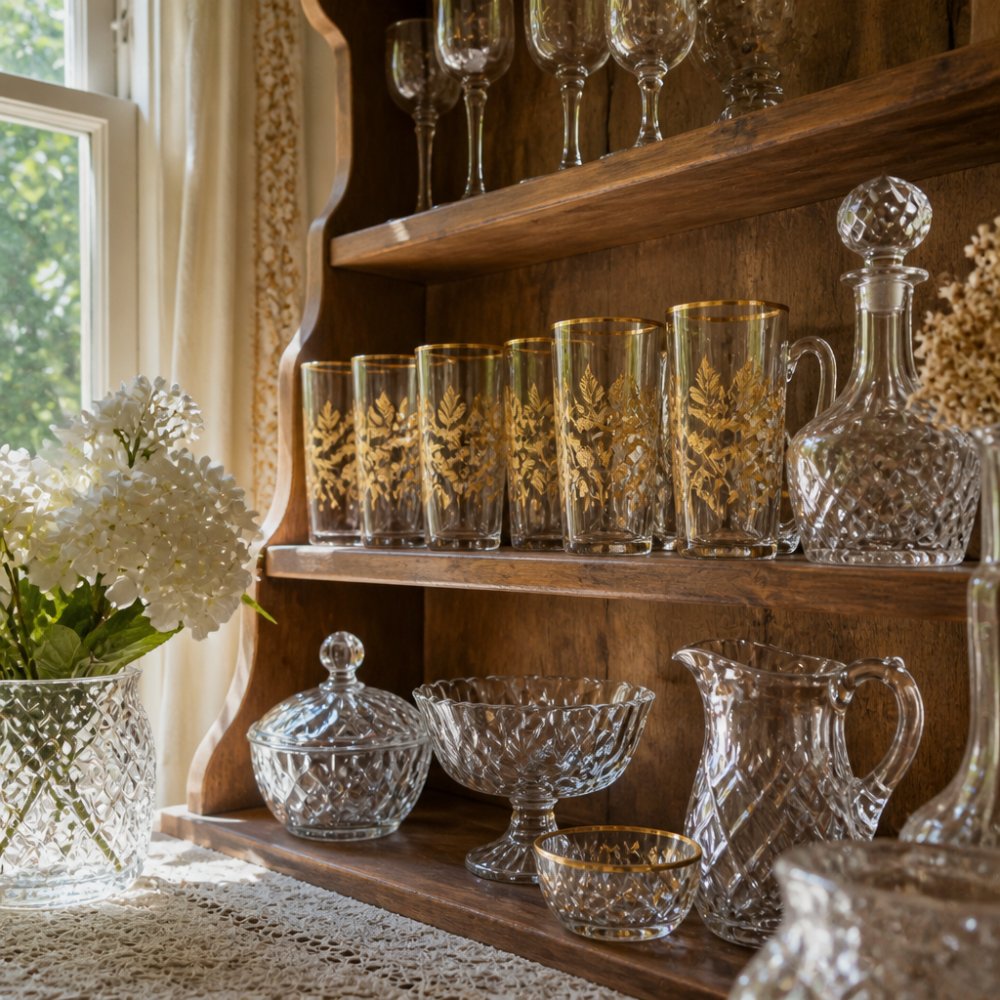
Display vintage glass where light can pass through it, and keep the arrangement low enough that it does not compete with the room's main view. Glass and crystal are the easiest vintage categories to display well because they do the decorative work themselves.
Three Arrangements That Work in a Normal-Sized Home
- The bar cart arrangement. Group your tumblers on the top tier with one taller crystal piece behind them for height. This is the single most forgiving beginner display.
- The open shelf. Line glassware along one shelf only, spaced evenly, with nothing stacked on top. Uniform spacing is what separates a display from a shelf of dishes.
- The cabinet with glass doors. Keep the back of the cabinet empty. A plain background makes decorated glass read clearly from across the room.
Displaying Glass in a Small Apartment
Glass is the best vintage category for tight spaces because it reads as decor without eating floor area. Three adjustments for a smaller space:
- Use a single floating shelf rather than a full cabinet. One shelf at eye level holds five to seven tumblers without crowding a wall.
- Rotate seasonally. Store the off-season pieces in a padded box and swap them in. A small display stays interesting when the contents change.
- Anchor with one taller piece. A single stemmed glass or small crystal bowl gives a short shelf a focal point so the arrangement does not look like a row of identical objects.
Checking for Damage Before You Display
Run through this before anything goes on a shelf a guest can reach:
- Rim check. Run a fingertip slowly around the entire rim. A chip you cannot see will catch your skin.
- Base check. Look for a hairline crack radiating from the foot, which is where stress fractures usually start.
- Cloudiness. A faint gray haze inside a tumbler is usually mineral buildup from hard water, not damage, a soak in a diluted white-vinegar solution often lifts it. Cloudiness that will not lift may be glass sickness, which is permanent.
- Loose decoration. If gold trim or painted leaves flake when you rub them gently with a dry finger, keep the piece out of daily use.
Cleaning and Storing Without Ruining the Finish
- Hand wash anything with gold trim. The metallic finish is the first thing to wear, and hot dishwasher cycles dull it long before the glass itself shows age.
- Skip the abrasive sponge. A soft cloth and mild soap are enough. Abrasives scratch the surface and leave a permanent haze.
- Dry immediately. Air-drying leaves water spots that etch into older glass over time.
- Store with padding. Wrap each piece in acid-free tissue or a soft cloth, and never stack tumblers directly inside one another, the friction chips rims.
Getting Started Without Overthinking It
The hardest part of collecting is the first purchase, so make it a small one. A $15.95 Woodleaf creamer and sugar bowl set or a $23.95 serving platter teaches you how vintage feels in your home without committing serious money.

Frequently Asked Questions
What are the best vintage items for beginners to collect?
Start with affordable, durable categories like vintage glassware, ceramic serving pieces, or porcelain salt boxes. These items are widely available, easy to clean, and don't require expert authentication knowledge. A set of Libbey tumblers or a hand-painted platter gives you a taste of vintage without a major investment. Look for pieces with clear maker's marks and minimal damage, and buy from sellers who document provenance and condition accurately.
How do I mix vintage and modern decor without making a room look cluttered?
Choose one or two vintage focal points per room and let modern pieces provide visual rest. For example, pair a vintage serving platter as wall art with a clean-lined modern dining table. Keep color palettes consistent, and limit vintage textiles to one or two patterns. The goal is contrast, not competition. Group smaller vintage items like salt boxes or tumblers on a tray or shelf so they read as a curated collection rather than scattered clutter.
How can I tell if a vintage item is high quality?
Check the maker's mark first. Marks like 'Spode Copelands China England' or 'Victoria Czechoslovakia' indicate documented manufacturers with known production standards. Look for even glaze, secure joints, and minimal crazing. Weight matters too: bone china and porcelain feel denser than mass-produced ceramic. Ask sellers for detailed condition photos, especially of rims, handles, and bases. Reputable sellers describe wear honestly and provide close-ups of any chips or repairs.
What is the best way to clean and care for vintage glass and china?
Hand wash vintage glass and china in warm water with mild dish soap. Avoid dishwashers, which can damage gold trim, hand-painted decoration, and delicate glazes. Use a soft sponge or cloth, never abrasive pads. Dry immediately with a lint-free towel to prevent water spots. For stubborn residue, soak in warm water for a few minutes before gently wiping. Store pieces with felt pads or paper plates between stacked items to prevent scratching.
How do I display vintage glass and crystal without risking damage?
Place glass and crystal on stable, level surfaces away from high-traffic areas. Use a cabinet or shelf with a lip or door if you have pets or kids. Group pieces by color or era for visual impact, and elevate smaller items on risers or stacked books. Rotate your display seasonally to keep the arrangement fresh. Avoid direct sunlight, which can fade colored glass over time, and never stack crystal directly on crystal without a protective layer.
Starting a vintage collection is less about budget and more about knowing which pieces will actually earn their place in your home. AtopTheTables has been sourcing from estates and auctions since 2003, and every piece in our inventory is personally selected, accurately described, and professionally packed for shipment. Explore our collection of glass, crystal, china, and distinctive home decor to find the piece that starts your table's story.