
How to Style Vintage Home Decor: A 2026 Guide
Table of Contents
- Understanding Your Vintage Aesthetic
- Mixing Vintage and Modern Decor for Balance
- Creating a Cohesive Color Palette
- Vintage Display Ideas for Collectibles
- Styling Vintage Collectibles in Your Home
- Avoiding the Cluttered or Dated Look
- Sourcing Authentic Vintage Pieces
- Maintenance and Care for Your Vintage Collection
- Frequently Asked Questions
Last Updated: September 21, 2026
Understanding Your Vintage Aesthetic
Learning to style vintage home decor starts with knowing what draws you in. Walk through your home and notice which pieces make you pause. Is it the warm glow of amber glass? The clean lines of mid-century modern? The ornate details of Victorian-era crystal? Your aesthetic is already there, you just need to recognize it.
At AtopTheTables, we've helped thousands of collectors discover their style by looking at what they already own. The pieces you're naturally drawn to reveal your taste. A cohesive vintage aesthetic doesn't mean everything matches. It means everything speaks the same visual language.
Start by identifying your era or style preference:
- Mid-century modern: clean lines, tapered legs, minimalist forms
- Bohemian: rich colors, ornate details, layered textures
- Eclectic maximalism: mixing multiple eras and styles intentionally
- Minimalist vintage: fewer pieces, each one a statement
- Transitional: blending vintage with contemporary elements
Your chosen aesthetic becomes the filter for every decision. When you see a vintage piece, ask: Does this fit my style language? If yes, it belongs in your home. If no, skip it, no matter how beautiful or inexpensive it is.
Mixing Vintage and Modern Decor for Balance
The real magic happens when vintage and modern work together. A room filled entirely with vintage pieces can feel like a museum. The sweet spot is balance.
Think of modern pieces as the canvas and vintage items as the art. Vintage decor adds character, history, and visual interest. Modern lighting and storage keep everything functional. Vintage accessories tell stories.
A practical approach: start with modern basics, then layer in vintage. Your lamps are modern. Your glassware and collectibles are vintage. This creates visual interest without chaos.
The 3-5-7 Rule for Cohesive Layering
This framework prevents rooms from feeling either too sparse or too crowded. The rule works like this:
- 3 large anchor pieces: These set the room's foundation. Think a sofa, dining table, or bookcase. These are typically modern or transitional.
- 5 medium-scale items: These include side tables, vintage glass display pieces, mirrors, or artwork. Mix vintage and modern here.
- 7 small accessories: These are your collectibles, small vases, books, or decorative objects. Vintage items shine here.
The ratio creates visual rhythm. Too many large pieces make a room feel cramped. Too many small pieces create clutter. This balance keeps things intentional.
For example, a living room might have five medium pieces like a mirror, plant stand, and decorative boxes, then seven small items like vintage tumblers on a shelf, framed photos, and collectibles.
Choosing Anchor Pieces and Focal Points
Every room needs a focal point. This is where the eye naturally lands. Make it count.
A focal point works best when it combines vintage with modern. You might use a vintage display cabinet as your anchor, then style it with modern lighting above. The contrast makes both elements stronger.
Anchor pieces should be substantial. They anchor the room visually and physically. A vintage glass compote alone won't anchor a room. A vintage compote displayed on a modern floating shelf with proper lighting becomes a focal point.

When choosing what becomes your focal point, consider:
- What's the largest or most decorative piece in the room?
- Where do guests' eyes naturally travel when they enter?
- What vintage item tells the strongest story?
- Can you highlight it with lighting or wall color?
The focal point should reflect your chosen aesthetic. If you love mid-century modern, make your focal point a vintage MCM piece. If you prefer eclectic maximalism, create a styled collection as your focal point.
Creating a Cohesive Color Palette
Color ties everything together. A room with mismatched colors feels chaotic, even if the pieces are beautiful individually.
Start by choosing 2-3 dominant colors. These should appear in your largest pieces and your walls. Then choose 1-2 accent colors that appear in smaller vintage pieces. Finally, add neutrals like white, cream, or soft gray to give your eye a place to rest.
For vintage pieces specifically, look at the natural colors in the glass, crystal, or decorative finishes. Gold-rimmed vintage glassware works beautifully with warm neutrals and jewel tones. Clear glass with minimal decoration suits cool tones and minimalist spaces. Colored glass, amber, green, blue, becomes your accent color.

A practical strategy: photograph your favorite vintage piece. Extract its colors using a color picker tool. Build your palette around those colors. This ensures your vintage finds work with your overall scheme instead of fighting it.
Vintage Libbey Leaf & Vine 12 oz →
Vintage Display Ideas for Collectibles
How you display vintage pieces matters as much as which pieces you choose. Display transforms a collection from scattered items into a curated story.
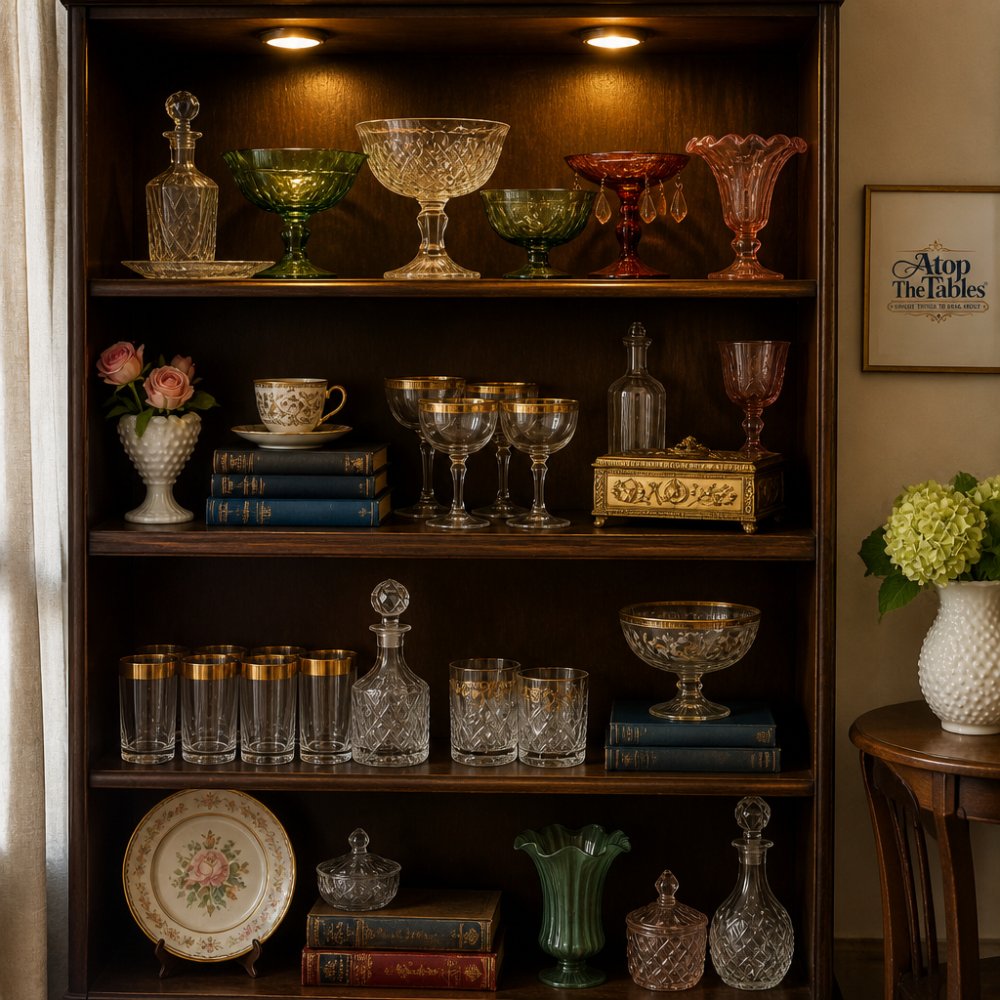
Grouping by Era and Scale
Grouping creates visual order. Instead of spreading vintage pieces throughout the room, cluster them intentionally.
Group pieces by era first. Mid-century modern glass grouped together creates visual coherence. Victorian-era crystal in one area tells a different story. When eras mix, do it intentionally, not by accident.
Then consider scale within each group. Arrange pieces from tallest to shortest, or alternate heights to create visual rhythm. A tall compote next to a short tumbler next to a medium vase looks intentional. Three pieces of the same height look accidental.
For collectibles specifically, grouping by material also works well. All your vintage glass together. All your crystal pieces in another area. This highlights the beauty of each material.
Lighting and Styling Vintage Glass and Art
Lighting transforms vintage glass. The same piece looks completely different in harsh overhead light versus warm accent lighting.
Use warm-toned lighting for vintage glass. It brings out the warmth in gold accents and makes clear glass glow. Avoid harsh white LED lights, they flatten vintage pieces and make them look washed out.
Consider backlighting for glass. A light source behind glass creates depth and highlights the clarity or color. This works especially well for vintage glassware displayed on shelves or in cabinets.
For artwork, the same principle applies. Vintage prints, photographs, or paintings deserve proper lighting. A simple picture light above a framed piece elevates it from decoration to focal point.
The American Society of Interior Designers emphasizes that lighting design is foundational to how collections are perceived. Proper lighting doesn't just show your vintage pieces, it honors their craftsmanship.
Styling Vintage Collectibles in Your Home
Once you've chosen your pieces and understood how to style vintage home decor, it's time to place them. Placement determines whether a collection feels curated or cluttered.
Start with your focal point. Place your strongest vintage piece where it will be noticed. This might be a vintage compote on a console table in your entryway. Or a collection of vintage tumblers on open shelving in your kitchen. Make it visible and accessible.
Then distribute secondary pieces throughout the space. Don't cluster everything in one corner.
Avoiding the Cluttered or Dated Look
The line between "curated vintage collection" and "cluttered thrift store" is thin. Here's how to stay on the right side.
Sourcing Authentic Vintage Pieces
Finding the right pieces is half the battle. Authentic vintage items have character and history. Reproductions look new, even when they're designed to look old.
Maintenance and Care for Your Vintage Collection
Vintage pieces are durable, they've already lasted decades. But they need proper care to stay beautiful and functional.
Frequently Asked Questions
What is the 3-5-7 rule in decorating with vintage pieces?
The 3-5-7 rule guides how to style vintage home decor by grouping items in odd numbers to create visual interest and avoid symmetrical, predictable layouts. Group three small vintage pieces together, five medium pieces in another area, and seven smaller accents throughout the room. This approach prevents overcrowding while ensuring your vintage aesthetic feels intentional rather than random. It works especially well when styling collectibles of varying scales and eras.
How do I style vintage collectibles without making my home look dated?
The key is balancing vintage pieces with modern elements and ensuring proper spacing. Mix eras deliberately: pair mid-century modern glass with contemporary artwork, or display vintage crystal alongside sleek modern shelving. Avoid clustering all vintage items in one corner; distribute them throughout the room. Use a cohesive color palette that ties pieces together, and ensure each item has breathing room. Proper lighting, especially on vintage glass or art, adds sophistication and prevents a cluttered, museum-like feel.
What's the best way to display vintage glass and crystal?
Vintage glass and crystal shine when displayed where light can pass through them. Place items on open shelving near windows or use accent lighting to highlight their translucent qualities and decorative details like gold trim or twisted stems. Group pieces by color or era rather than randomly, and vary heights to create visual rhythm. A vintage compote or decanter works beautifully as a focal point on a dining table or bar cart. Hand washing is recommended to preserve decorated finishes, especially on pieces like vintage Libbey glassware with gold accents.
How do I know if vintage pieces are authentic when sourcing?
Look for maker marks, signatures, or stamps on the base or back of pieces. Research the manufacturer and production period, authentic vintage items often have documented histories. When sourcing from reputable dealers, ask about provenance: where the piece came from and how long it's been held. Authentic vintage pieces show consistent signs of age and use. Reputable sellers like AtopTheTables provide detailed condition descriptions and professional photography so you can inspect items closely before purchasing.