
How to Display Vintage Crystal Collections
Table of Contents
- Assess Your Space and Collection Size
- Choose Display Cabinets for Collectibles That Fit Your Style
- Arrange Your Pieces for Visual Interest and Balance
- Optimize Lighting to Showcase Refraction and Sparkle
- How to Clean Vintage Crystal Safely
- Secure Your Collection: Safety and Earthquake Protection
- Rotate and Refresh Your Vintage Crystal Display
- Care for Mixed Materials: Bone China and Decanters
- Frequently Asked Questions
Last Updated: September 23, 2026
To display vintage crystal effectively requires more than just finding shelf space. It demands thoughtful curation, proper lighting, and structural safety, especially if you're building a serious collection. At AtopTheTables, we offer a curated selection of pieces that can be transformed into stunning focal points, showcasing the artistry and history behind each item.
The difference between a scattered display and a curated one comes down to planning. A well-arranged collection tells a story and invites conversation.
Assess Your Space and Collection Size
Before you install lighting, understand what you're working with. Measure your available space in inches, count your pieces, and identify which items are your anchors, the showstoppers that everything else will support.
Cramming pieces together diminishes visual impact and increases damage risk.
Ask yourself these questions:
- How many pieces do you currently own?
- How much do you plan to acquire in the next year?
- Which items are your favorites, the ones that must be visible?
- Do you have wall space, shelf space, or both?
- Is your room bright or dim?
Your answers determine which display style works best. Small collections thrive on open shelving; larger collections need organized storage with rotating displays.
Choose Display Cabinets for Collectibles That Fit Your Style
The right cabinet lets you display vintage crystal transformed from scattered to curated, depending on your space, aesthetic, and protection needs.
Glass-Front Curio Cabinets
A glass-front curio cabinet protects crystal from dust while keeping it visible, with glass on three sides, adjustable shelves, and a solid back panel.
Curio cabinets can help keep collections organized and visible while protecting against accidental bumps from children or pets.
To avoid a museum-case look, vary piece heights, mix in non-crystal items and books, and leave negative space.
Open Shelving and Wall-Mounted Displays
Open shelving makes a bold design statement. Your crystal becomes part of your room's architecture, not hidden behind glass.
Wall-mounted shelves work beautifully for smaller, curated collections. A single shelf of 5-8 standout pieces can anchor an entire room; open displays demand restraint.
Open shelving requires more frequent cleaning, but many collectors prefer this trade-off for accessibility and integration into daily life.
Shadow Boxes and Wall Niches
For truly special pieces, consider shadow boxes or built-in wall niches. These architectural features frame individual items like art, turning a single piece into a statement focal point.
Shadow boxes can be ideal if you have a few items that are truly exceptional and deserve solo spotlighting.
Arrange Your Pieces for Visual Interest and Balance
Once you've chosen your display method, thoughtful arrangement transforms ordinary pieces into intentional displays.
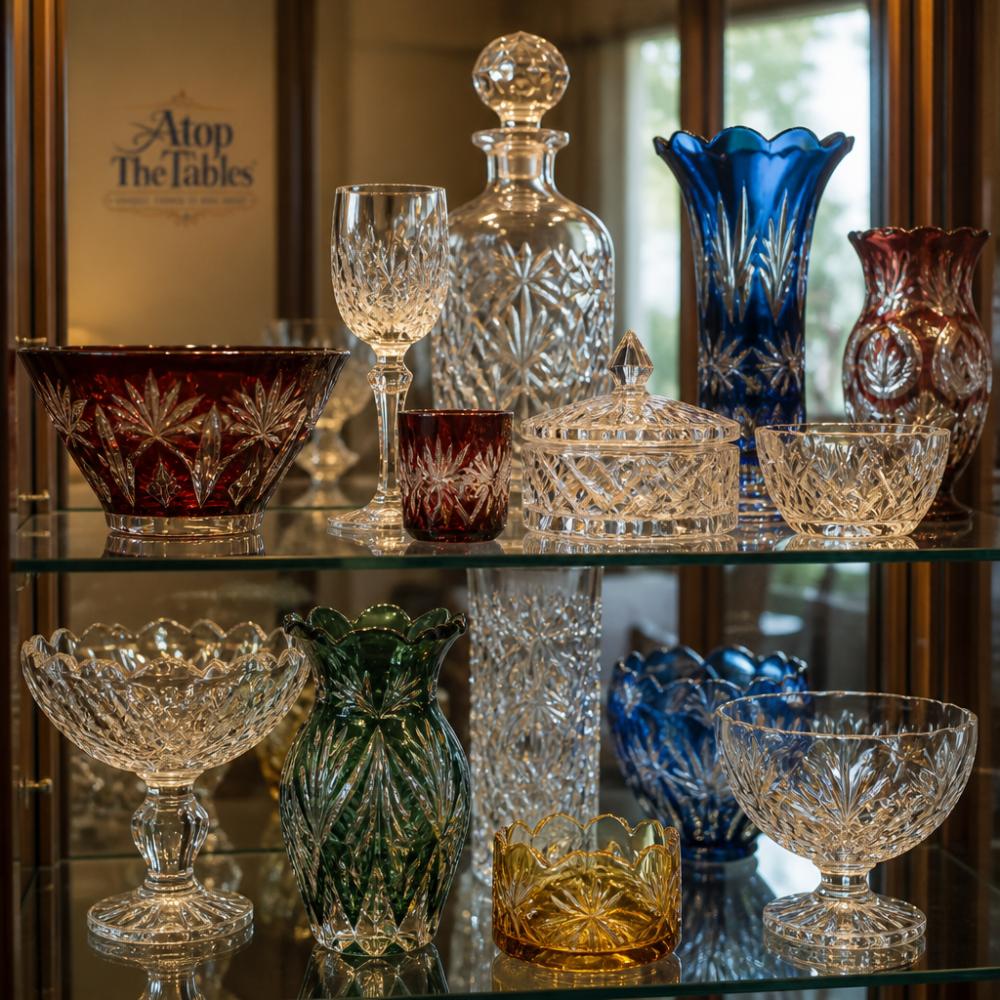
Height and Depth Variation
Arrange pieces in a staggered pattern with taller items in back and shorter items in front to create visual depth and allow light to hit every piece.
Vary depth by pulling some pieces forward and creating pockets of space; this layering makes your collection feel intentional rather than crowded.
Grouping by Color and Style
Group pieces by color or era to create visual coherence. Clustered pieces are more striking than scattered individually.
Break up color groups with contrasting pieces and mix styles from different eras to prevent a catalog-like feel.
Creating Focal Points
Every display needs an anchor, your largest, most ornate, or most valuable piece, positioned where the eye naturally lands when entering the room.
Everything else supports that focal point. Smaller pieces, lighter colors, and simpler shapes should recede slightly. This hierarchy keeps your display from feeling chaotic.
Optimize Lighting to Showcase Refraction and Sparkle
Crystal's magic lives in light. Understanding how light interacts with crystal through refraction, reflection, and sparkle lets you design a display that transforms throughout the day.
Natural Light Placement and Limitations
Position your display where natural light hits it daily, east, west, or diffused north light. Avoid prolonged direct, harsh sunlight, which can fade glass colors and cause uneven aging.
Natural light alone can be inconsistent, with cloudy days dimming displays, winter light being weaker, and evenings leaving collections less visible. Supplemental lighting can enhance year-round shine.
American Brilliant Cut Crystal Pedestal →
LED and Accent Lighting: Color Temperature and Placement
LED strip lights are ideal for accent lighting: they produce minimal heat, consume little energy, and come in warm or cool tones that dramatically affect how crystal appears.
Warm white LEDs (2700K): These emit a soft, golden light that makes crystal feel inviting and intimate. Warm light is ideal for evening displays and rooms with traditional or vintage décor. It flatters amber, topaz, and rose-tinted crystal but can make clear crystal appear slightly yellow.
Neutral white LEDs (3500K-4000K): This middle ground balances warmth and brightness. It's versatile and works in most settings. Clear crystal appears bright without looking cold. Colored crystal retains its true hue.
Cool white LEDs (5000K-6500K): These emit bright, bluish light that maximizes sparkle and refraction. Cool light makes clear crystal appear brilliant and sharp. However, it can feel clinical in residential spaces and may make some vintage pieces look sterile.
Placement angle matters as much as color temperature. Position LED lights to graze across pieces rather than shine directly at them.
Layered Lighting for Depth and Drama
Sophisticated displays can use layered lighting, combining ambient light (warm, soft room illumination), accent light (LED strips or spotlights that directly illuminate crystal), and optional task lighting (a small, focused source for close examination).
Dimmer Switches and Time-of-Day Adjustment
Install dimmer switches on accent lighting to adjust brightness by time of day and season. Evening displays benefit from 30-50% brightness; daytime displays can handle 75-100%. Winter displays need brighter light to compensate for shorter days.
Troubleshooting Common Lighting Problems
Dull crystal: Light is too warm or dim; increase brightness or shift to 4000K. Glare: Light is too bright or direct; reduce brightness or angle obliquely. Washed-out color: Light is too cool or bright; shift to 2700K-4000K. Day/night difference: This is normal with layered lighting; adjust accent brightness if needed.
How to Clean Vintage Crystal Safely
Crystal requires gentle care. One wrong move, aggressive scrubbing, harsh chemicals, or extreme temperature changes, can damage decades-old pieces. The goal is to clean without compromising the crystal's surface, patina, or structural integrity.
Gentle Washing Techniques and Water Temperature
Wash crystal by hand in lukewarm water (100-110°F) with mild dish soap. Never use the dishwasher, which clouds crystal, dulls finishes, and weakens old glue.
Eco-Friendly Cleaning Solutions
Commercial crystal cleaners can contain harsh chemicals. Gentler alternatives may work well and be safer for vintage pieces.
Removing Stubborn Interior Deposits
For stubborn interior spots, fill with warm water and a drop of mild dish soap. Let sit 15-20 minutes, then swirl gently, never shake vigorously.
Drying and Polishing
Never leave crystal wet. Pat dry immediately with a lint-free cloth, microfiber works best.
Frequency and Long-Term Preservation
Clean displayed crystal every 3-6 months, depending on your environment. Stored crystal needs cleaning only when rotated into display.
Secure Your Collection: Safety and Earthquake Protection
Crystal is fragile. Securing it prevents accidents and protects your investment.
Using Museum Putty and Seismic Wax
Museum putty and seismic wax are adhesive compounds designed for collectibles. They hold pieces in place without damaging surfaces or leaving residue.
Cabinet Anchoring and Stabilization
Secure display cabinets to wall studs using L-brackets to prevent tipping. This is especially important in homes with children or pets.
Rotate and Refresh Your Vintage Crystal Display
Rotating your collection keeps your display fresh and reduces wear on pieces in constant light.
Seasonal Rotation Strategies
Change your display every 3-4 months, rotating stored pieces onto shelves and displayed pieces into storage to reduce dust and light exposure.
Inventory Management for Collectors
Keep a simple spreadsheet or photo log noting where each piece came from, when acquired, and its condition. This tracks display versus storage and documents history for insurance.
Care for Mixed Materials: Bone China and Decanters
Many collectors display crystal alongside fine china or decorative bottles, each with slightly different care needs.
Frequently Asked Questions
What are some creative ways to display a crystal collection?
Display vintage crystal in glass-front curio cabinets, open shelving with accent lighting, or wall-mounted shadow boxes. Vary heights and group pieces by color or style to create visual interest. Use pedestals or risers to elevate smaller pieces, and position your collection where natural or LED light can catch the refraction and sparkle. Rotating seasonal displays keeps the aesthetic fresh while protecting pieces from extended light exposure.
How do you safely clean and maintain vintage crystal?
Wash vintage crystal by hand in lukewarm water with mild dish soap and a soft sponge, avoiding abrasive scrubbers. Dry immediately with a lint-free cloth to prevent water spots. For delicate cut crystal patterns, use a soft-bristled brush to reach crevices. Store pieces upright or on protective padding, and use museum putty or seismic wax to secure items in display cabinets, especially in earthquake-prone areas. Dust regularly with a microfiber cloth to maintain brilliance.
What is the best lighting for displaying crystal collections?
Position crystal collections where natural daylight can highlight refraction and sparkle, but avoid prolonged direct sunlight which can fade some pieces. Layer in LED accent lighting, track lights or cabinet lights positioned above or behind pieces create depth and enhance light play. Soft white or warm LED bulbs (2700K-3000K) can complement crystal's clarity. Uplighting from below can add drama, while side lighting may emphasize cut patterns and geometric motifs in American Brilliant or deeply carved crystal.
How can I display crystal without cluttering my space?
Use vertical display strategies like wall-mounted shelves, tall curio cabinets, or shadow boxes to maximize space without spreading pieces across multiple surfaces. Group related items together rather than scattering them throughout a room. Apply the principle of negative space, leave room between pieces so each can be appreciated individually. Rotate your collection seasonally, storing pieces you're not currently displaying in acid-free boxes on closet shelves. This approach keeps your space visually organized while protecting your heirloom pieces.