
Bone China Care: How to Clean, Store, and Protect It
Table of Contents
- Bone China Care Starts With Knowing What You Own
- How to Clean Bone China Without Damaging the Glaze
- Is Bone China Dishwasher Safe? What the Settings Decide
- Removing Tea Stains From Bone China
- How to Store Bone China So It Survives the Years
- Care by Decoration and Product Type: A Decision Guide
- Caring for Older, Antique, and Already Damaged Pieces
- Frequently Asked Questions
Last Updated: October 21, 2026
Bone China Care Starts With Knowing What You Own
Bone china care begins with one honest look at the piece in your hands. Bone china is a type of fine porcelain made with bone ash, which gives it a warm ivory tone, a translucent body, and surprising strength for something so thin.
At AtopTheTables, we have handled estate china since 2003.
Below, we walk through washing, drying, storing, and protecting your china, plus a decision guide for the tricky pieces.
How to Clean Bone China Without Damaging the Glaze
Clean bone china with warm water, a mild dish soap, and a soft cloth or sponge. The glaze is glass-like and thin, so anything abrasive dulls it permanently. There is no polishing it back.
Work one piece at a time. Line the sink with a towel first, so a slip does not mean a chip.
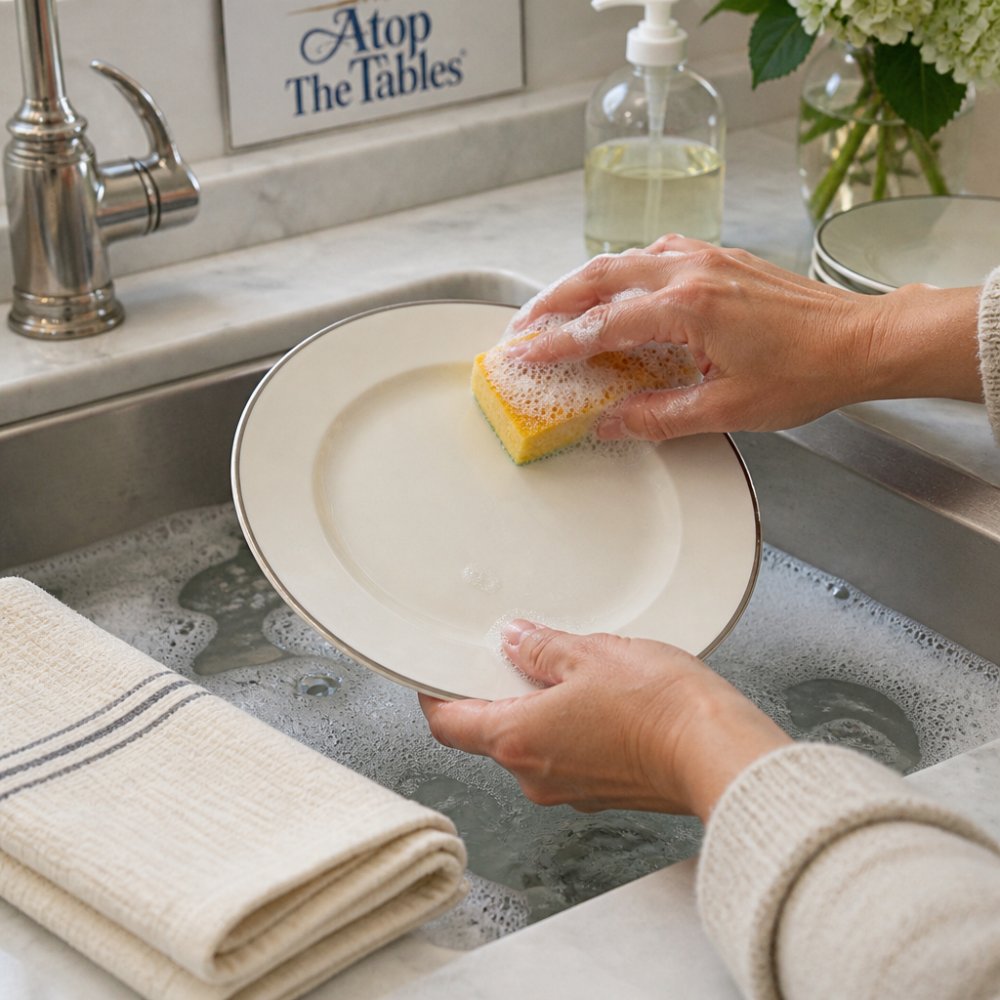
Handwashing Step by Step
- Line the sink basin with a folded towel.
- Fill with warm, not hot, water and a few drops of mild dish soap.
- Wipe each piece with a soft sponge, inside and out.
- Rinse under running warm water.
- Set on a clean towel to air dry, or pat dry with a soft cloth.
- Never stack wet pieces on top of each other.
What to Avoid: Abrasives, Scouring Pads, and Thermal Shock
Skip scouring pads, steel wool, and powdered cleansers. They scratch the glaze and wear away gold trim and metallic decoration with a few washings.
Thermal shock is the bigger threat. It means a sudden swing from hot to cold, or cold to hot. A cold plate under a hot rinse can crack along the rim. So can a hot cup plunged into cold water.
Avoid these outright:
- Naked flame or stovetop contact
- Microwave use on any piece with metallic trim
- Freezer storage
Is Bone China Dishwasher Safe? What the Settings Decide
Some bone china is dishwasher safe and some is not, and the label on the bottom or the maker's care instructions decide it. Our Lenox Solitaire pieces, for example, are listed as dishwasher safe.

If your maker allows it, use the gentlest cycle your machine offers. A low-temperature, short cycle with a mild detergent protects the glaze far better than a heavy pots-and-pans setting.
Settings that matter:
- Temperature: low or china cycle, never the sanitize setting
- Detergent: mild, no citrus or oxygen boosters
- Loading: spaced out, no nesting, no overcrowding
When to Handwash Instead
Handwash any piece with gold trim, metallic decoration, or hand-painted detail you care about. Handwash antique or vintage china of unknown history. Handwash anything already showing crazing, which is the fine web of cracks in the glaze that lets water into the body.
A useful rule: if you would be upset to lose it, wash it by hand.
Removing Tea Stains From Bone China
Tea stains, coffee rings, and gray utensil marks are the three most common complaints, and each has a different cause and a different safe fix. The key distinction: most marks sit on top of the glaze and lift off, while a true stain has etched into the glaze and will not come out no matter how hard you scrub. Knowing which one you have prevents the most common self-inflicted damage, a dulled patch where someone attacked an etched stain with an abrasive.
Identify the mark before you treat it
- Tea and coffee film: a brown or tan haze inside cups and along the rim, usually from tannins left to sit. This is a surface deposit and responds well to gentle lifting.
- Gray utensil marks: faint metallic streaks left by forks and spoons rubbing the glaze. These are tiny deposits of metal transferred from flatware, not scratches, and they lift easily.
- Etched stain: a mark that remains after gentle cleaning and feels slightly rough or dull to the touch. The glaze itself has been attacked, often by acidic tea or coffee left overnight. No cleaner restores it; only professional reglazing addresses it.
Safe removal methods by mark type
Baking soda paste (start here for tea film and utensil marks). Mix three parts baking soda to one part water into a soft paste.
Denture-cleaning tablet soak (for stubborn tea film inside cups). Fill the cup with warm water, drop in one tablet, and let it sit 15 to 30 minutes.
White vinegar and water (for hard-water and mineral film). A 50/50 mix of white vinegar and warm water, applied briefly and rinsed well, dissolves mineral haze.
Treatments that can damage glaze or decoration
- Scouring pads, steel wool, and powdered cleansers: these scratch glaze permanently and strip metallic trim within a few washings.
- Oxygen or chlorine bleach boosters: they can dull glaze and fade hand-painted color.
- Overnight acid soaks: vinegar or lemon juice left for hours attacks both glaze and trim.
How to Store Bone China So It Survives the Years
Most chips and scratches happen in the cabinet, not the sink. Bone china is strong in compression but weak against point loads and edge impacts, so the goal of storage is to make sure no hard surface ever touches another hard surface and no handle carries weight. The mechanics matter more than the checklist.
Set of 4 Lenox Solitaire Ivory Platinum Dinner Plates 10.5" USA Bone China EUC →
Padding and stacking plates
Put a soft barrier between every plate. Felt pads cut to the plate diameter are the gold standard because they do not compress or hold moisture; paper coffee filters, cloth napkins, and thin foam sheets also work.
Limit stacks to four or five plates. The weight of a taller stack concentrates on the bottom rim, and bone china rims are thin.
Cups, handles, and bowls
Stand cups upright. Stacking cups inside each other puts the foot of one cup against the interior glaze of another and stresses the rim of the lower cup.
Handles are the most vulnerable part of any cup.
Bowls stack more safely than plates because the foot of one bowl sits inside the well of the one below, but still pad between them and keep stacks shallow.
Long-term versus everyday storage
Everyday pieces can live on an open shelf if the shelf is padded and out of traffic. Long-term storage, seasonal pieces, inherited sets, anything not used for months, needs more: wrap each piece individually in acid-free tissue or clean cotton, not newspaper (newsprint ink transfers to glaze), and box in a rigid container that will not crush. Store boxes off the floor in a dry interior closet, not a basement or garage where humidity swings cause crazing and mold.
Environment and shelf placement
- Dry and stable: humidity swings are the enemy; a damp basement invites mold into crazing and can worsen existing cracks.
- Out of direct sun: ultraviolet light fades hand-painted decoration and can yellow glaze over years.
- Low-traffic shelf: the top shelf of a closed cabinet beats an open display rack in a hallway where a sleeve can catch a rim.
A storage checklist you can actually follow
- Pad between every stacked plate with felt, foam, or cloth
- No more than four or five plates per stack, largest at the bottom
- Cups upright or on their sides, never hung by the handle
Care by Decoration and Product Type: A Decision Guide
The right care depends on what the piece is decorated with and how old it is. Use this guide to sort your own collection.
| Piece Type | Dishwasher | Key Risk | Best Method |
|---|---|---|---|
| Plain bone china, no trim | Usually yes, gentle cycle | Chipping from crowding | Dishwasher on low heat |
| Gold or platinum trim | No | Trim wear and dulling | Handwash, warm water |
| Hand-painted decoration | No | Fading and glaze wear | Handwash, soft sponge |
| Antique or unknown age | No | Crazing and hidden cracks | Handwash, inspect yearly |
| Everyday use pieces | Gentle cycle if labeled safe | Thermal shock | Warm rinse, air dry |
If you are unsure, handwash. It costs a few minutes and protects a piece you cannot replace.
Caring for Older, Antique, and Already Damaged Pieces
Older bone china needs a lighter touch than new production. Antique pieces often have thinner glaze, older trim, and small flaws that a dishwasher turns into real cracks.
Inspect antique pieces once a year under good light. Look for crazing, chips along the rim and foot, and trim that has worn to gray.
Already damaged pieces can still be used and displayed. Handle chipped rims with care, keep them out of the dishwasher, and avoid hot liquids.
Manufacturer care instructions beat general advice every time. Our Lenox Solitaire dinner plates and matching salad plates are both labeled dishwasher safe, while older hand-decorated pieces from the same cabinet may not be.

For deeper guidance on ceramics and glazes, the Smithsonian Museum Conservation Institute publishes care notes for ceramic collections. The American Ceramic Society also covers glaze and firing basics that explain why heat matters so much. And the Library of Congress preservation guidance offers practical storage advice for household collections.
Frequently Asked Questions
Can you put boiling water in fine bone china?
Skip boiling water. Bone china handles heat unevenly, and a sudden jump from room temperature to boiling can cause thermal shock, which shows up as a hairline crack. Let the kettle cool for a minute or two, or warm the cup first with a splash of warm tap water. The same rule applies to cold: never pour hot liquid into a piece straight from a chilly cabinet. Warm water and mild dish soap are all you need for cleaning, and hot water from the tap is fine for rinsing.
Is bone china ok for everyday use?
Yes, for many patterns. Bone china is fired with bone ash, which makes it denser and more chip-resistant than earthenware, and pieces like the Lenox Solitaire dinner plates are described by their maker as chip-resistant and dishwasher safe. The limits come from decoration, not the body: gold trim, platinum bands, and hand-painted florals wear faster with daily washing. Rotate a few pieces for daily meals and keep the most decorated ones for occasions. Always check the care instructions stamped on the piece or its original packaging.
How do you remove stains from bone china?
For tea and coffee marks, soak the piece in warm water with a few drops of mild dish soap for 15 to 20 minutes, then wipe with a soft cloth. Stubborn brown staining inside a cup often lifts with a paste of baking soda and water applied gently with a fingertip, then rinsed well. Utensil marks, the gray lines left by silverware, usually rub off with a soft eraser-style sponge. Never use scouring pads or abrasive cleaners, which scratch the glaze and leave a dull patch that traps future stains.
How should you store bone china safely?
Stack plates no more than four or five high, with a felt pad, paper coffee filter, or cloth napkin between each one so the glaze and trim never touch. Stand cups and saucers upright rather than nesting them, and hang or rest teacups by the handle only if the handle is solid. Keep shelves away from radiators, sunny windows, and damp basements. For long-term storage, use a padded box with dividers and label it fragile, and avoid sealing pieces in plastic, which can trap moisture against the glaze.
Bone china care comes down to a few habits: warm water, mild soap, no abrasives, no heat swings, and padding between every piece. That is the whole method, and it protects a set for decades.
At AtopTheTables, we hand-pick vintage china from estates and auctions, so we know how much history rides on each plate. Our pieces arrive carefully packed and ready for your table. Explore our curated china collection and find a set worth caring for.
